Constructivist learning theory implies that learning is established through the modification of a student’s existing intellectual framework. It identifies learners as active participants and requires students to make connections between previous and new knowledge (Bruner, 1990). In the constructivist theory of learning, students are encouraged to breakdown information themselves, and interpret material through their lens of individuality (Duchesne & McMaugh, 2018; Scheurman, G. 1998). Vygotsky’s Social Constructivism emphasises the importance of collaboration and defines learning as an interpersonal activity (Duchesne & McMaugh, 2018). Social constructivist theory of learning also institutes the Zone of Proximal Development, being the distance between a student’s current development, and the level of potential development though the support of peers (Churchill et al., 2019).
I am able to utilise my understanding of the Constructivist learning theory in the classroom, to enhance student learning. In particular, through an awareness of the Zone of Proximal Development and the significance of making connections between previously conceived and new knowledge, I can implement open-ended activities which require student collaboration and problem-solving skills. In this way, students are able to investigate a problem, consider the significance of what they already know and work together to reach a solution (Baviskar, Hartle & Whitney, 2009).
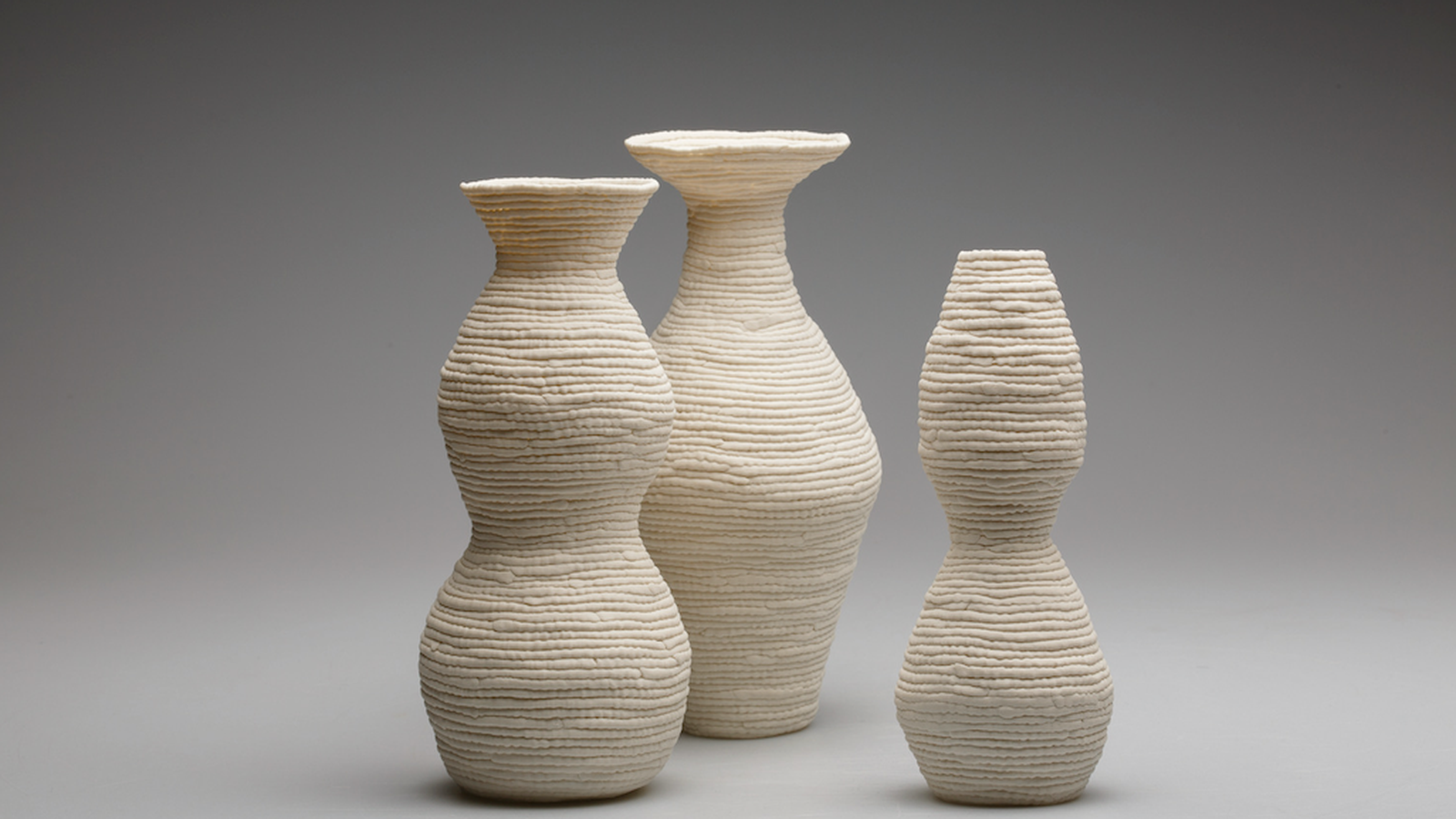
In the Visual Arts/Object Design subject area, I believe a constructivist approach to inquiry-based learning would be a fantastic learning experience. I propose an activity in which students are split into groups and given a clay based sculptural form, from there, students are given the task of investigating how this form was constructed. In order to successfully engage in this activity, students must utilise visuacy (visual literacy) skills and apply content knowledge. This activity emphases the importance of artist practice and meduim, as students must draw on their understanding of clay to determine whether the artist’s practice involved slab construction, wheel throwing or coils, as well as question the surface treatment of the work. This activity heavily embodies the constructivist theory of learning as students are required actively inquire about the forms, creating questions and using collaboration to reach an answer.
My proposed constructivist approach to analysing clay-based forms and artist practice meets the AITSL standards 3.1, 3.2. and 3.4 (AITSL, 2018). By instigating a challenging learning goal of working backwards and using a critical eye to examine practice. Similarly, the level of difficulty may be adjusted within this activity to appeal to the varying abilities of students through teacher assistance, prompts and “clues”. By strategically organising the groups into a range of abilities, more capable learners may support the development of lower achieving students, as dictated by the ZPD. This activity organises content to cater for the array of learners in the classroom, visual, kinaesthetic, verbal, as well as requires both individual and collaborative engagement. The use physical artworks as a choice of resources further engaging students in learning by promoting curiosity and inquiry and potentially acting as a ‘hook’.
Although the activity fosters collaborative inquiry to understand artist practice and investigate clay building, the activity has the potential for “blinkered social consensualism” (Fox, 2001 as cited in Liu & Matthews, 2005) in that groups with a limited prior knowledge base may be restricted in their ability to find an accurate conclusion. Therefore, I propose the adaptation where students are required to support and prove their findings with research. By including ICT as an avenue to question their ideas, I lift some of the restrictions based around students’ prior knowledge. Similarly, the criticism of social constructivism that “ignores the role of the individual” (Resnick, 1996 as cited in Liu & Matthews, 2005) may be avoided by adding an element of individual reflection. In asking students to record their findings individually not only addresses individualised learning but begins to address standard 2.5 in cross curriculum priorities of literacy skills. Standard 2.5 could further be explored with the provision of measuring equipment, asking students to consider the weight and dimension of the sculptural form and how that may influence artist practice; as well as consider the limitations of some clay building techniques in relation to scale.
Citations
Australian Institute of Teaching and School Leadership. (2017). Australian Professional Standards for Teachers. https://www.aitsl.edu.au/teach/standards
Baviskar 1, S., Hartle, R., & Whitney, T. (2009). Essential Criteria to Characterize Constructivist Teaching: Derived from a review of the literature and applied to five constructivist-teaching method articles. International Journal of Science Education, 31(4), 541-550.
Bruner, J. (1990). Acts of Meaning. Cambridge, MA: Harvard University Press
Churchill, S., Godinho, S., Johnson, N. F.; Keddie, A., Letts, W.; Lowe, K.; Mackay, J.; McGill, M.; Moss, J.; Nagel, M.; Shaw, K.; Vick, M. (2018). Teaching: Making a difference (4th ed.). Milton, Australia: John Wiley & Sons.
Duchesne, S. and McMaugh, A., 2018. Educational psychology for learning and teaching. Cengage AU.
Liu, C. & Matthews, R. (2005) Vygotsky’s philosophy: Constructivism and its criticisms examined. International Education Journal, 6(3), 389-391. https://files.eric.ed.gov/fulltext/EJ854992.pdf
Scheurman, G. (1998). From Behaviorist to Constructivist Teaching. Social Education, 62(1), 6-9.
 ACU Student Blog